![Dusk Owl logo [FINAL] [imprint name; bei](https://static.wixstatic.com/media/899994_afba5854b33143f7b84c423a226dbec8~mv2.jpg/v1/crop/x_57,y_0,w_1566,h_1480/fill/w_169,h_160,al_c,q_80,usm_0.66_1.00_0.01,enc_avif,quality_auto/Dusk%20Owl%20logo%20%5BFINAL%5D%20%5Bimprint%20name%3B%20bei.jpg)
Our Authors
Wolfgang Giegerich is a Jungian psychoanalyst now living and working in Berlin, Germany. He has lectured and taught in many countries. He has been an invited speaker at the Eranos conferences (Ascona, Switzerland) from 1981 until the final conference in 1989, and at the Kyoto Zen Symposium (Kyoto, Japan) in 1988. Twice he spent a semester as Visiting Professor of Clinical Psychology at Kyoto University, Kyoto, Japan. He is the author of numerous articles and books, among them in English six volumes of his Collected English Papers (2005–2014), What is soul? (2012), Neurosis: The logic of a metaphysical illness (2013), all formerly published by Spring Journal Books, New Orleans, now by Routledge, London and New York, as well as The soul’s logical life: Towards a rigorous notion of psychology (Peter Lang, Frankfurt/Main 1998, 5th edition revised and extended by an index, 2020).
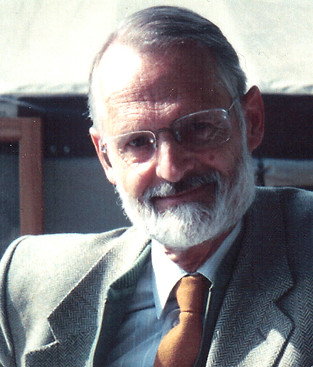
Greg Mogenson, the publisher of Dusk Owl Books, is a registered psychotherapist and Jungian psychoanalyst practicing in London, Ontario, Canada. A founding member and former Vice-President of The International Society for Psychology as the Discipline of Interiority, he is the author of numerous articles in the field of analytical psychology. His books additional to those listed on this website include Psychology’s Dream of the Courtroom; A Most Accursed Religion: When a Trauma becomes God; Greeting the Angels: An Imaginal View of the Mourning Process; The Dove in the Consulting Room: Hysteria and the Anima in Bollas and Jung; and (with W. Giegerich and D. L. Miller) Dialectics & Analytical Psychology: The El Capitan Canyon Seminar.

Marco Heleno Barreto (Brazil), PhD, is a Jungian psychotherapist, working in private practice. He teaches philosophy at FAJE – Faculdade Jesuíta de Filosofia e Teologia, in Belo Horizonte, Brazil. He is the author of Símbolo e Sabedoria Prática. C.G. Jung e o Mal-estar da Modernidade (2008), Imaginação Simbólica. Reflexões Introdutórias (2008), Pensar Jung (2012), Homo imaginans. A imaginação criadora na estética de Gaston Bachelard (2016) and Estudos (Pós)Junguianos (2018). He also has contributed articles to Spring Journal, International Journal of Jungian Studies, Journal of Analytical Psychology and Jung Journal. He presently serves on the Executive Committee of the International Society for Psychology as the Discipline of Interiority (ISPDI).

Michael Whan, MA, is an analytical psychologist with the Independent Group of Analytical Psychologists and the International Association for Analytical Psychology, as well as a registered Jungian Analyst/Psychotherapist with the United Kingdom Council for Psychotherapy. He has a practice in St. Albans, Hertfordshire and in London. He has been a long-time member of the International Society for Psychology as a Discipline of Interiority. Additionally, he is a senior associate of the Royal Society of Medicine and a patron of the Department of Germanic Studies of the Institute of Modern Languages, University of London. He has presented papers at several conferences, conducted seminars, and given lectures in various countries around the world, including the United Kingdom and Japan, and countries in Europe and North America. He has published numerous articles and book reviews in various Jungian journals. In addition, he has contributed chapters to several books on a variety of topics. His most recent contributions are: “Disavowal in Jungian Psychology: A Case Study of Disenchantment and the Timing of Shame,” in Temporality and Shame: Perspectives from Psychoanalysis and Philosophy (2018); “Nihilism and Truth: Tarrying with the Negative,” in Shame, Temporality and Social Change: Ominous Transitions (2021); “The Uroboric Logic of Anxiety, ‘Not Out, But Through,’” in Essays on “The Soul’s Logical Life” in the Work of Wolfgang Giegerich: Psychology as the Discipline of Interiority (2024); and “Aurum Vulgi: A Reflection on Simulation in Psychology and Its Philosophical and Historical Backdrop,” in Where Is Soul? Psychology in Modernity (2025).
